| Can | Cannot |
|---|---|
| Spend directly from exchange-held assets | Bypass identity verification |
| Skip the convert-to-tenge-and-withdraw leg | Bypass limits or monitoring |
| Work at merchants accepting the card scheme | Work where that scheme is not accepted |
| Keep you on a licensed institution's path | Make non-compliant funds compliant |

What it actually is
In plain terms: an ordinary payment card whose balance is sourced from digital assets you hold on a licensed exchange. When you pay, the system converts the corresponding quantity into local currency behind the scenes. The merchant sees no difference — it receives an ordinary card payment.
The National Bank has been driving this work and has kept it within the licensed perimeter. The intent is legible: open a formal route for everyday use of digital assets while keeping that route in supervisory view.
What it means for you is one step removed. The old path was assets → convert to tenge → withdraw to a bank card → spend. Now it is assets → spend. And the step removed happens to be the one the cashing-out guide identifies as most troublesome.
What it genuinely solves
Three things, and none of them is vaguely "convenience":
It routes around the P2P leg. The most substantial benefit. No stranger counterparty, therefore no risk of receiving problematic funds, and a large part of the card-freeze exposure disappears. For someone who simply wants to spend a little USDT, that outweighs any difference in fees.
The path is compliant. Funds originate from a licensed institution and the trail is legible, which is easy to explain when you later need to account for source of funds.
Low friction for small purchases. Running a whole withdrawal process to buy something small is not worth the time or cost. This is exactly that gap.
What it cannot do
The point most in need of clarifying: this is not a tool for avoiding oversight. Issuance runs through licensed institutions, so identity verification, limits and monitoring are all present. If your expectation is that it lets you sidestep something, the expectation is wrong.
- Identity verification applies. As with opening an exchange account. No way around it.
- Limits apply. Per transaction, per day and per month caps are usual; the figures are whatever the issuer currently publishes and they change.
- Acceptance is bounded by the card scheme's coverage. Not every merchant. Use abroad brings additional rules.
- It does not change the tax character. Paying with crypto is, under many regimes, still a disposal and may be a taxable event (see the tax guide). Plenty of people assume "it never became money so it does not count", which is a misreading.
- The conversion has a cost. There is a spread at the moment of the transaction — not conspicuous, and always present.
That last one deserves attention. Because the cost is embedded in the conversion rate rather than itemised as a fee, it is easy to feel there was no charge. To see the real cost, compare the rate used at the point of sale with the market rate at that moment; the difference is it. The rate comparison tool is useful for exactly that.
Day-to-day quirks that are not faults
A few behaviours differ from an ordinary bank card. Knowing them saves you from thinking something has broken.
Pre-authorisation and the final charge may differ
Fuel stations, hotels and car rentals place a pre-authorisation, often larger than the eventual amount, and reverse the difference later. On an ordinary card you see a hold. On a crypto card, because there is a conversion layer, the rate may have moved between authorisation and settlement, so the two figures not matching is normal.
The practical impact is minor, but when your statement shows a discrepancy, check whether this is the explanation before reporting a fault.
A refund may not return the same quantity
You spent a quantity of an asset; the merchant refunds a local currency amount, which the system converts back into an asset. If the price moved in between, the quantity you get back differs. Higher and you receive less; lower and you receive more.
That is the mechanism, not anyone shortchanging you. It is worth noting on larger amounts, particularly for buy-then-return purchases.
Overseas and online payments may follow different rules
Cross-border transactions engage more rules and may carry extra fees or restrictions. Try a small transaction abroad before you need to rely on it.
Statements are harder to read
The one I would flag most: your spending is recorded as quantities of an asset, while your mental accounting runs in tenge. Over time, reconciling becomes tedious.
If you need this for expenses, bookkeeping or tax records (spending crypto is a disposal under many regimes), note the local currency amount at the time of each transaction. Back-deriving at quarter end is far more work.
Four things to confirm before applying
Products like this are marketed on convenience; the terms are where the substance is. Confirm these before rather than after:
Who is the issuer and who supervises them
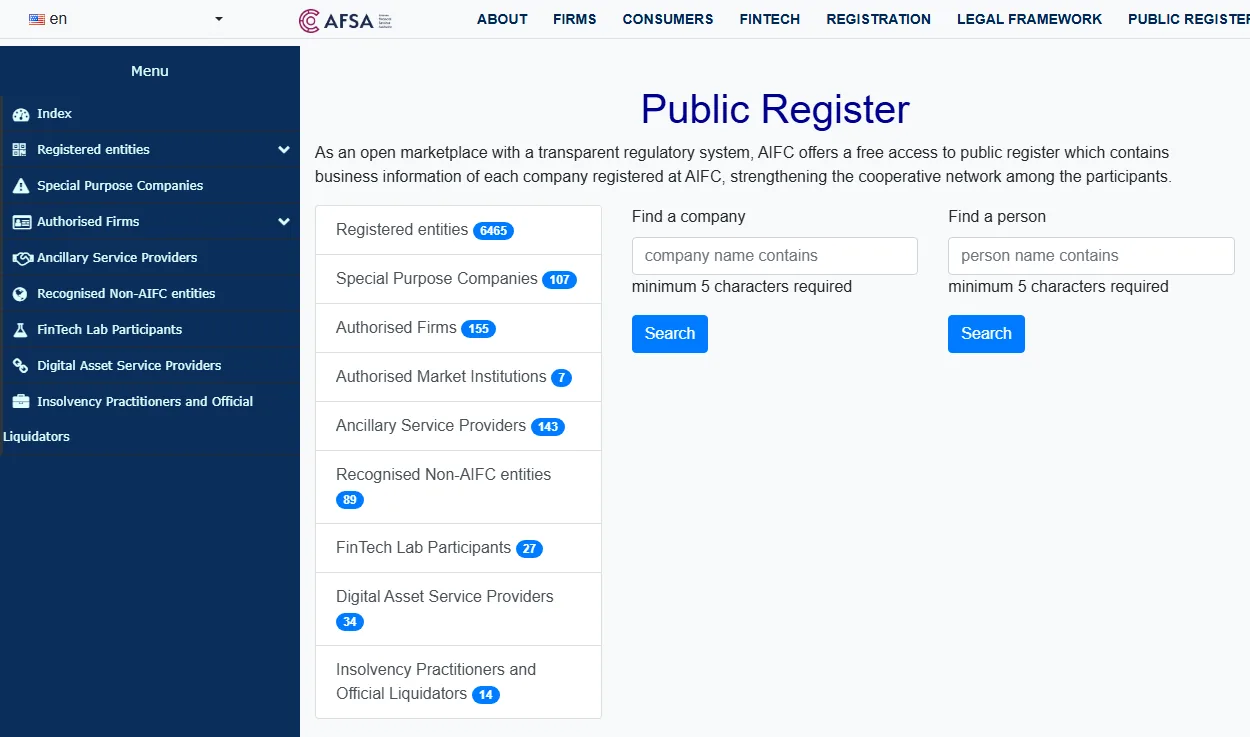
The brand on the card, the entity operating it, and the institution actually holding your assets may be three different parties. What you need to establish is who your counterparty is if something goes wrong. That is in the terms of service, not the marketing page. Verify it the same way you verify an exchange licence — against the public register, not against wording.
What happens to the balance if there is a problem
If the card is suspended, the account frozen, or the issuer stops providing the service, what happens to the assets sitting behind it? The terms should say. If you cannot find such a clause, that absence is itself a signal.
Which rate is used for conversion
At the moment of payment, what price applies — a particular exchange's live price, the issuer's own quote, is a margin added? That determines your implicit cost. The terms are usually technical about this, and it is worth reading once.
Are there annual or dormancy fees
Many such cards carry an annual fee, or charge maintenance if unused for a long period. Applying and not using it may quietly cost you. If your plan is "get one and keep it for later", check this first.
The same general habit applies here as everywhere else on this site: once you have it, run one small transaction through the whole flow — load it, spend once, look at the statement, confirm the rate used. Then put real money on it.
Card or withdrawal: which when
| Situation | Better option | Why |
|---|---|---|
| Everyday small spending | Card | Skips the whole withdrawal process |
| Large amount, needs to be in a bank account | Withdrawal | Card limits, and it never reaches an account |
| Paying another person | Withdrawal | A card is for spending, not transfers |
| Trade settlement | Neither | See cross-border settlement |
| Just wanting it in cash terms | Withdrawal | A card balance is still a digital asset and still moves |
The last row surprises people: having a card does not mean the money is in tenge. Until you spend, that balance is still a digital asset carrying price movement. If your objective is to stop being exposed to that, a card does not achieve it; withdrawing does.
One further practical suggestion: do not keep much on it. Treat it like cash in a wallet — enough for ordinary use. Same reasoning as not keeping large sums somewhere easy to spend, and the same reasoning as spreading assets generally.
Who should get one, and who should not
In one line: it suits people who hold some digital assets on an ongoing basis and have everyday spending locally. If you only buy and sell occasionally, or your assets exist purely for cross-border settlement, you will probably never use it.
- Suits: living locally, routinely keeping some USDT, with regular small purchases. It replaces "running a full withdrawal to buy something".
- Optional: modest holdings, infrequent spending. The saved friction is limited, and every extra account is another thing to manage.
- Does not suit: trade settlement (wrong size and wrong purpose), people trying to escape price movement (it does not do that), and anyone whose assets sit mainly offshore (this route runs through locally licensed institutions).
My own reading: it is a good thing whose importance is overstated. What it optimises is not a high-frequency situation, while what it adds — another account, another set of terms, another layer of conversion cost — is permanent. Work out which group you are in before deciding.
Risk notice: crypto prices move violently and you can lose everything you put in; an unspent card balance continues to move with the underlying asset. Issuers, limits, fees and acceptance change with regulation and commercial decisions — whatever the issuer currently publishes is authoritative. Nothing here is investment or tax advice. Some jurisdictions restrict crypto assets, so check the rules where you are.
What the official side says about these cards
The card programme is still being rolled out and its terms move faster than most topics here. These are the primary sources that exist today; where nothing official has been published yet, the article says so.Last checked September 2026
- Regulation of the digital assets market National Bank of KazakhstanWhich licensed entities may be involved in a crypto card, and the limits of that activity.
- Kazakhstan introduces regulation of digital asset circulation (announcement, 30 Apr 2026) National Bank of KazakhstanThe regulatory point in time at which this article was written.
- Register of electronic money systems in Kazakhstan National Bank of KazakhstanThe register of electronic money systems, where the issuer behind a card can be checked.
- Permissions issued by the National Bank National Bank of KazakhstanThe list of institutions authorised for payment-related business.
- AFSA public register of regulated entities Astana Financial Services AuthorityIf the card comes from an AIFC-based firm, its regulatory standing is in this register.
- Daily official market exchange rates National Bank of KazakhstanThe spread on a card transaction can be judged against the official market rate.
- Kaspi.kz official website Kaspi BankWhere a local card is actually accepted, and its limits, come from the bank's own terms.